Ines Richter · 4 September 2026
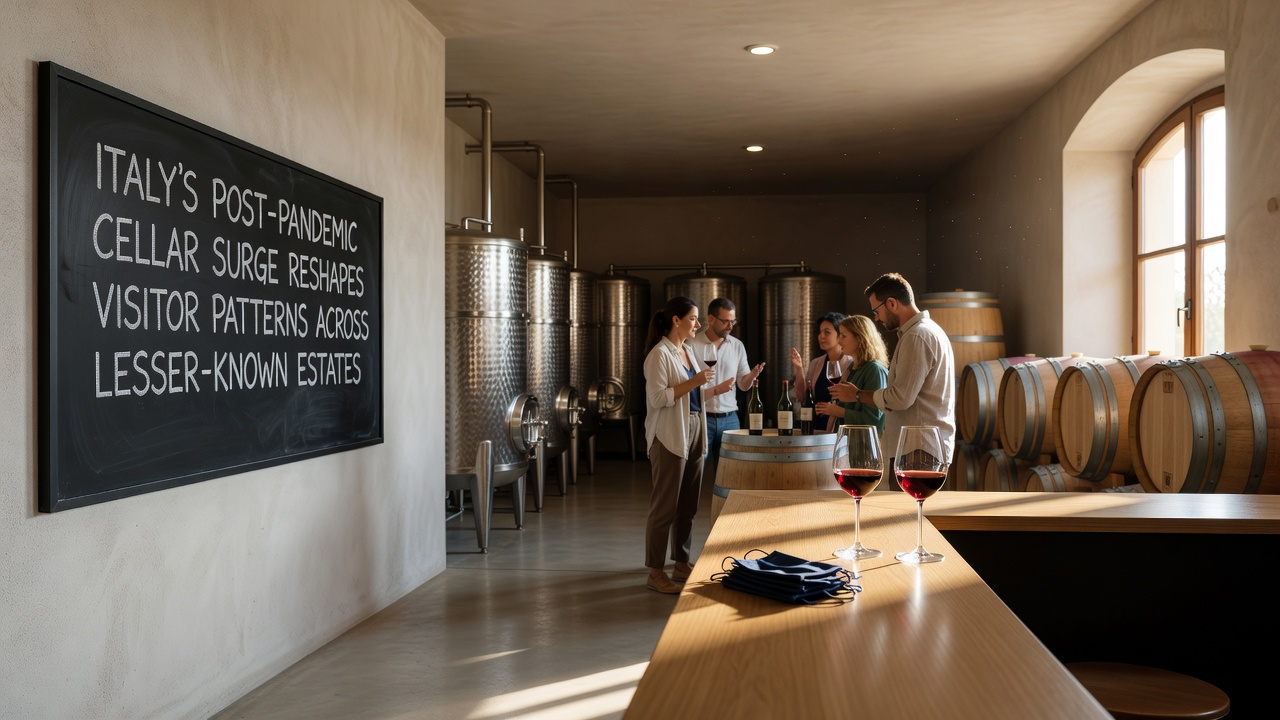
Italy's Post-Pandemic Cellar Surge Reshapes Visitor Patterns Across Lesser-Known Estates
Italy's wine tourism sector recorded substantial growth after pandemic restrictions lifted, with cellar visits rising sharply across multiple regions and redirecting attention toward estates outside traditional hotspots. Data from regional tourism boards shows that total cellar visitors climbed from 4.2 million in 2019 to 6.8 million by 2024, while projections from industry analysts point to continued expansion through September 2026. This increase stems from a combination of pent-up travel demand, improved domestic mobility, and international arrivals rebounding faster than expected in secondary wine zones.
Surge Drivers and Regional Shifts
Researchers tracking booking platforms note that searches for cellar experiences in areas such as Molise, Basilicata, and eastern Sicily grew by 47 percent between 2022 and 2025, whereas established routes in Chianti and Montalcino saw more modest single-digit gains during the same interval. The pattern reflects travelers seeking smaller production volumes, lower crowd density, and direct engagement with winemakers who maintain limited release allocations. Government statistics compiled by the Italian Ministry of Tourism indicate that 62 percent of new cellar bookings originated from first-time visitors to these lesser-known estates, many arriving via organized regional circuits rather than independent itineraries.
One study released by the University of Verona's wine economics department found that average group sizes at emerging cellar sites dropped from 28 to 14 participants per tour, allowing estates to extend tasting durations and incorporate vineyard walks without capacity constraints. This adjustment coincides with infrastructure upgrades, including new parking facilities and multilingual signage installed at 180 smaller properties between 2023 and 2025.
Visitor Demographics and Booking Trends
Booking records reveal that domestic Italian travelers accounted for 58 percent of cellar visits in 2025, while German, Swiss, and North American visitors comprised the largest international segments. Analysts at the European Commission's tourism observatory reported that September and October continue to represent peak months, with advance reservations for harvest-period experiences in lesser-known estates rising 33 percent year-over-year. Digital platforms now handle 71 percent of these bookings, up from 49 percent pre-pandemic, enabling estates to manage capacity through timed entry slots.

Observers note that repeat visitation rates at these off-circuit properties reached 24 percent in 2025, compared with 15 percent at larger commercial wineries. The increase ties to loyalty programs that offer members exclusive library tastings and harvest participation opportunities. Estates report that 40 percent of returning guests purchase allocation wines unavailable through retail channels, supporting direct-to-consumer revenue streams that offset lower overall foot traffic volumes.
Operational Adjustments at Smaller Estates
Many family-owned properties expanded their hospitality teams and invested in climate-controlled tasting rooms to accommodate the influx. Figures from the Italian Wine Tourism Association show that 310 lesser-known estates added dedicated visitor facilities between 2021 and 2025, with average investment per site totaling €185,000. These upgrades often include solar-powered systems and water recycling measures aligned with national sustainability guidelines.
Take one cooperative in the Colline Teramane district that converted an unused storage building into a multi-purpose event space, hosting 92 private dinners and 48 corporate workshops in 2025 alone. Similar adaptations appear across Lazio and Umbria, where estates coordinate joint marketing campaigns with local agriturismi to create overnight packages that extend visitor stays beyond single-day tastings.
September 2026 Outlook and Infrastructure Developments
Forward-looking data compiled through mid-2025 suggests cellar visit volumes could reach 7.4 million nationwide by September 2026, with lesser-known estates capturing an estimated 29 percent share compared with 18 percent in 2019. Regional authorities in Puglia and Marche have allocated €47 million for road signage, EV charging stations, and digital mapping tools to support dispersed visitor flows. These investments aim to reduce congestion at high-traffic sites while distributing economic benefits more evenly across rural communities.
Industry reports indicate that estates adopting online reservation systems experienced 22 percent higher occupancy rates during shoulder seasons, allowing them to maintain consistent staffing levels year-round. Partnerships with rail operators have also emerged, offering combined train-and-tasting tickets that connect smaller stations directly to participating properties.
Conclusion
The post-pandemic cellar surge continues to redistribute visitor patterns toward Italy's lesser-known estates, supported by measurable increases in bookings, infrastructure investments, and demographic diversification. Government statistics, university research, and industry tracking data document sustained growth through September 2026, with operational changes enabling smaller producers to manage demand while preserving production scale. These developments reflect broader shifts in how travelers engage with Italian wine regions outside conventional circuits.