Harper Richter · 30 October 2026
Steady Warming Trends Prompt Umbria's Wine Producers to Experiment with Heat-Tolerant Grape Types
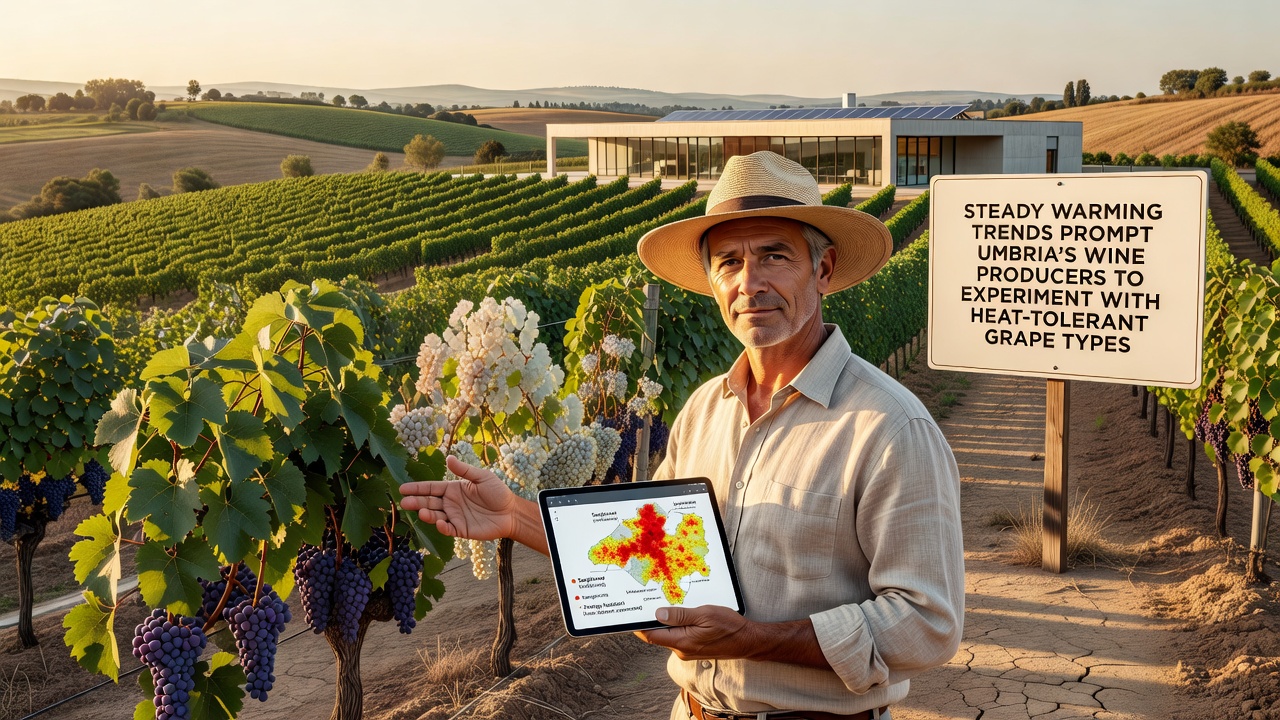
Steady temperature increases across central Italy have pushed Umbria's wine producers to test heat-tolerant grape varieties in recent seasons, and records from regional monitoring stations confirm an average rise of 1.8 degrees Celsius since the 1980s in key growing zones around Perugia and Orvieto. Traditional varieties such as Sangiovese and Grechetto now face earlier ripening windows along with elevated sugar levels that alter fermentation outcomes, while prolonged dry spells reduce yields in many hillside plots. Producers respond by introducing experimental blocks of varieties like Nero d'Avola from Sicily, Aglianico from Campania, and several Spanish and Portuguese types known for drought resistance, and these trials expanded noticeably after the 2024 and 2025 harvests.
Observed Climate Shifts in Umbrian Vineyards
Weather data compiled through October 2026 indicate that summer highs in Umbria now regularly exceed 34 degrees Celsius for extended periods, and this pattern has shortened the growing season by roughly two weeks compared with conditions recorded thirty years ago. Soil moisture levels drop faster under these conditions, prompting irrigation adjustments where permitted under DOC rules, whereas many estates rely instead on rootstock selections that access deeper water reserves. Researchers at Italian agricultural institutes have documented increased incidence of heat stress markers in leaf samples from Sagrantino vineyards near Montefalco, and these findings align with broader European Environment Agency reports on Mediterranean warming trends.
Harvest dates for white grapes in the region advanced by an average of twelve days between 2000 and 2025, while red varieties show similar compression in phenolic development windows. Observers note that acidity retention becomes harder to maintain without canopy management changes, and several estates now harvest at night to preserve fruit integrity during peak heat events.
Producer Experiments with Alternative Varieties
Multiple estates in the Colli del Trasimeno and Torgiano areas began small-scale plantings of heat-tolerant cultivars in 2023, and initial results from those blocks reached the market in limited bottlings by late 2026. Varieties such as Fiano, Vermentino, and the Portuguese grape Touriga Nacional demonstrate better tolerance to water deficit and higher daytime temperatures, while maintaining balanced acidity in trial fermentations. Winemakers combine these new plantings with adjusted training systems that increase shade on clusters, and they monitor berry composition weekly during the final ripening phase to time picking decisions more precisely.
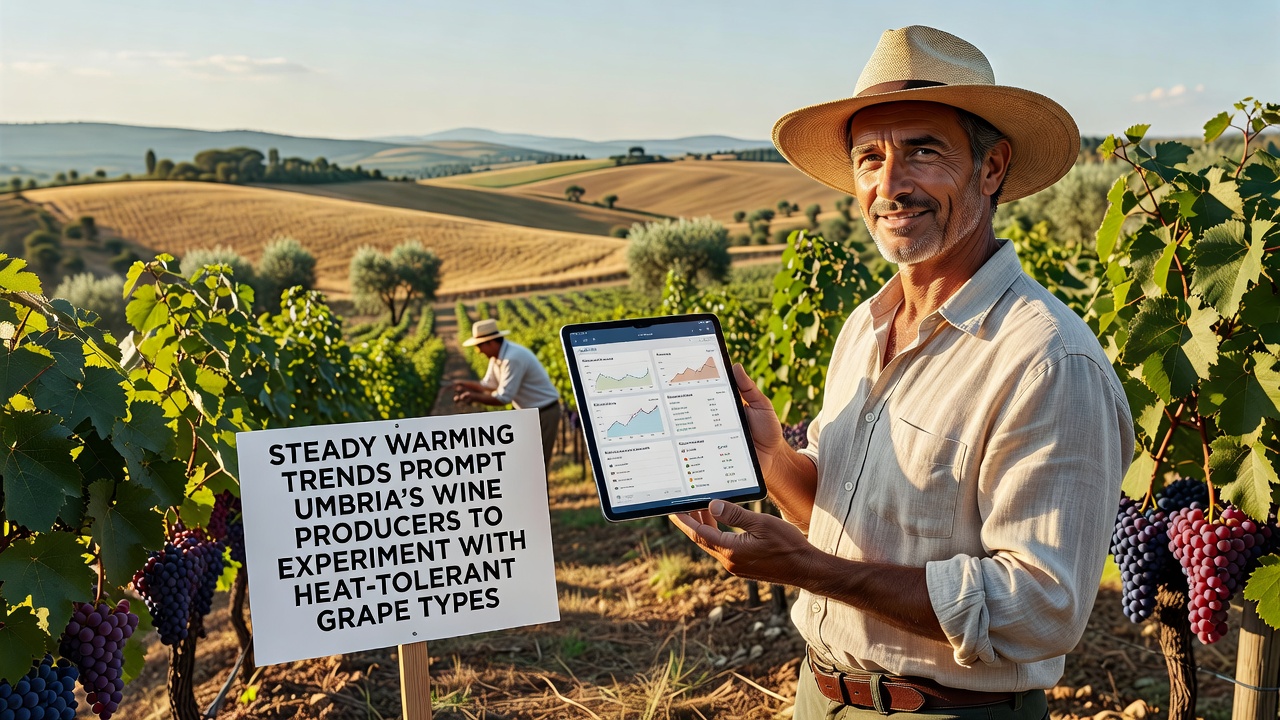
One cooperative near Assisi expanded its nursery program in 2025 to supply heat-adapted cuttings to members, and this initiative now includes rootstock trials paired with drought-resistant scions. Data collected from these sites show reduced incidence of sunburn damage and more consistent phenolic ripeness, although tannin structure in some red varieties requires further blending adjustments. Producers share results through regional grower associations, and several have formed informal networks to compare performance across different soil types and elevations.
Regulatory and Market Considerations
Umbrian DOC and DOCG regulations currently limit the percentage of non-traditional varieties that can appear in labeled wines, yet producers seek amendments that would allow greater flexibility for climate adaptation. Discussions at the regional consortium level continue into October 2026, and participants review data from similar adjustments already implemented in Tuscany and Emilia-Romagna. Export markets show interest in wines that carry stories of sustainability and innovation, and several estates report that early trial bottlings attracted attention from buyers in northern Europe and North America seeking lower-alcohol options from warmer climates.
Cost analyses indicate that new plantings require five to seven years before full commercial production, and smaller estates weigh these timelines against immediate revenue needs from established vineyards. Equipment upgrades for processing riper fruit also factor into investment decisions, and some producers explore partnerships with research institutions to offset part of the experimental costs.
Outlook for Future Plantings
Regional climate projections through 2040 suggest continued warming, and this outlook drives further interest in genetic material from southern Italian and Mediterranean sources. Nurseries in Umbria report increased orders for heat-tolerant clones, and extension services provide technical guidance on site selection and canopy management suited to these varieties. Long-term monitoring programs track vine performance across multiple vintages, and results will inform whether broader replanting programs become necessary across the region.
Conclusion
Umbria's wine sector continues to adapt through targeted variety trials and management adjustments as temperature records keep rising, and the outcomes of current experiments will shape planting decisions for years ahead. Data from ongoing studies and harvest reports provide the foundation for these shifts, while regulatory bodies evaluate updates that balance tradition with practical responses to changing conditions.